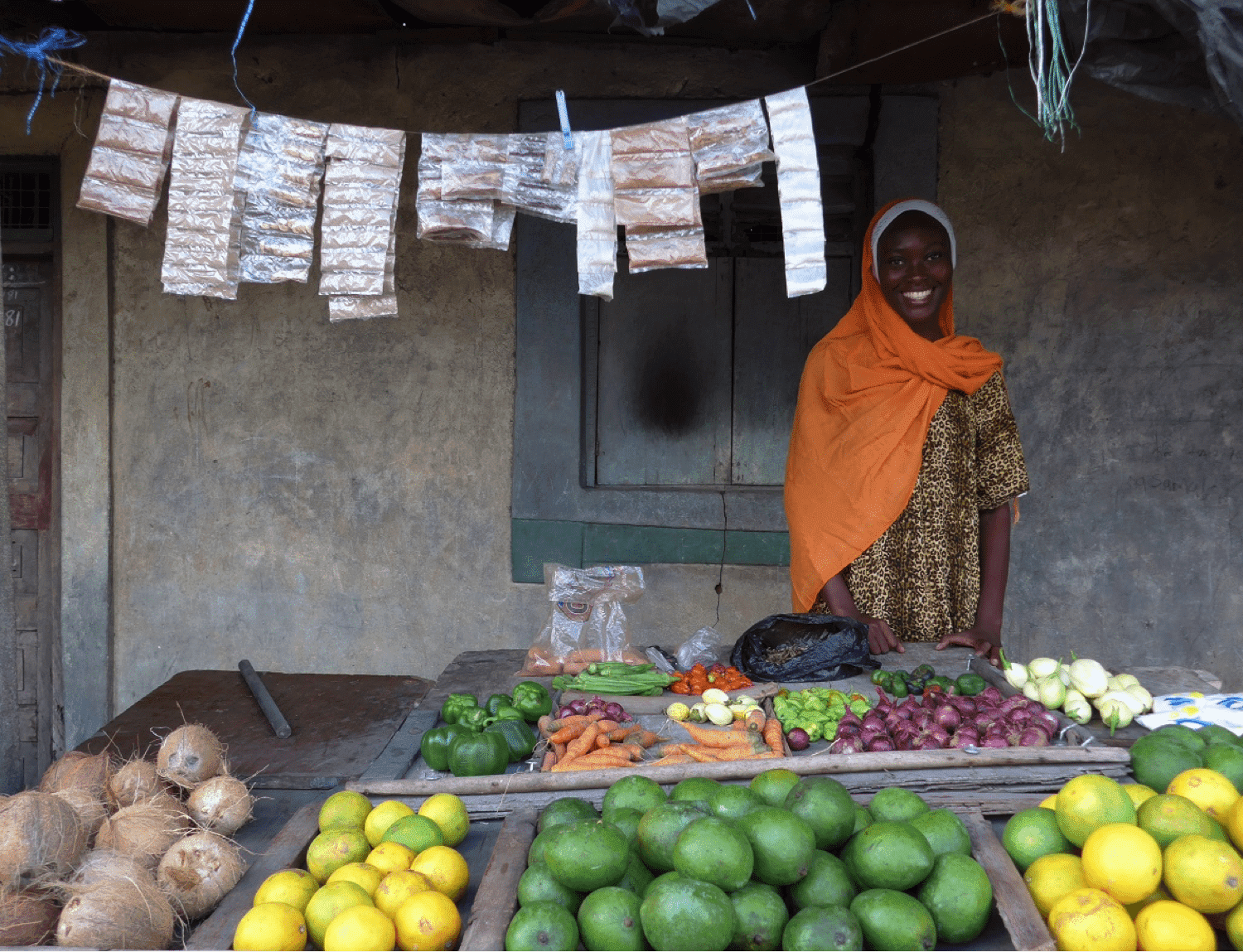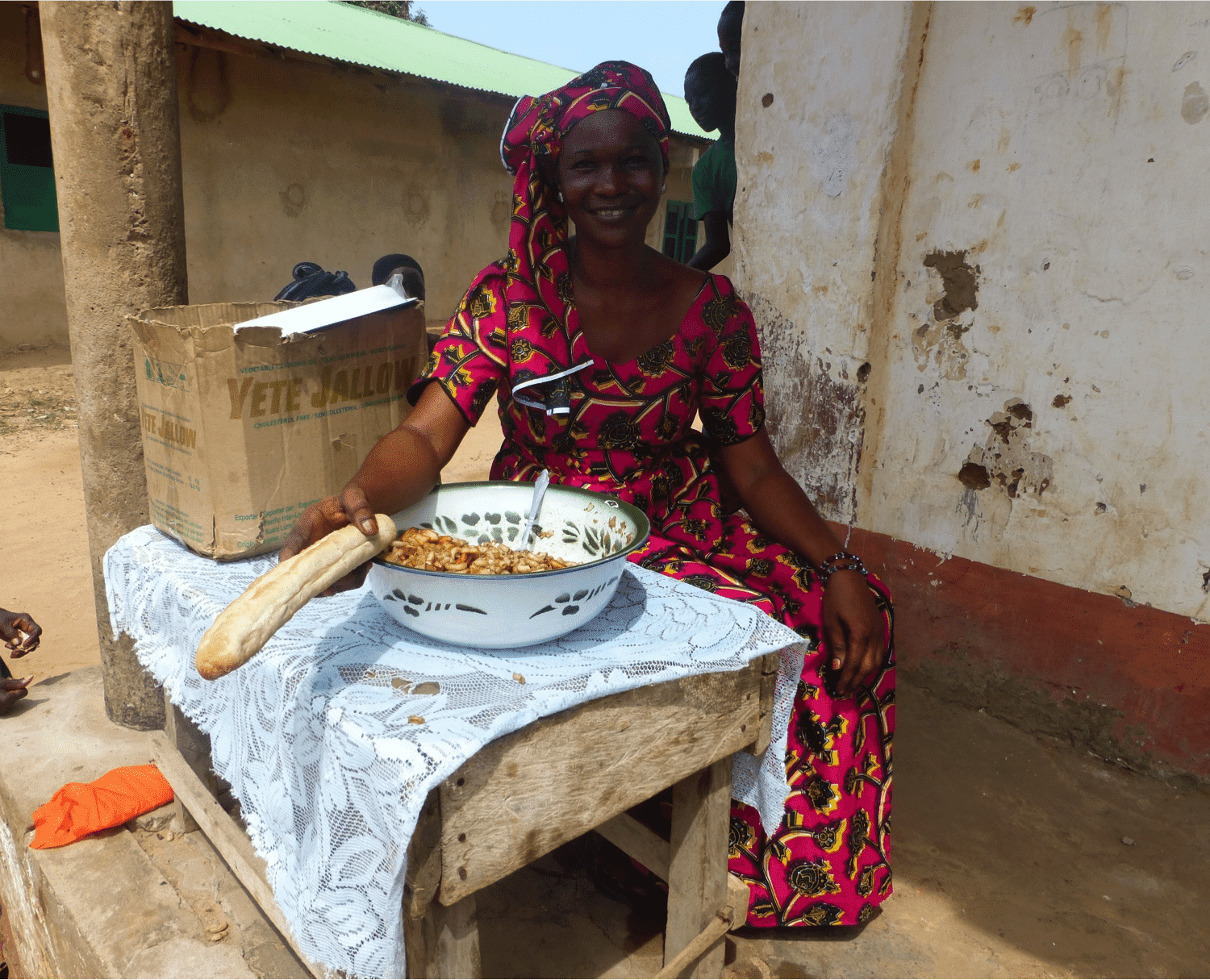
Mbeya is one of the most distant regions in the country and with Whole Planet Foundation support of $496,000, they will add over 3,568 new clients who were previously unreached!
About Tanzania
Shortly after achieving independence from Britain in the early 1960s, Tanganyika and Zanzibar merged to form the nation of Tanzania in 1964. One-party rule ended in 1995 with the first democratic elections held in the country since the 1970s. Zanzibar's semi-autonomous status and popular opposition have led to two contentious elections since 1995, which the ruling party won despite international observers' claims of voting irregularities. The formation of a government of national unity between Zanzibar's two leading parties succeeded in minimizing electoral tension in 2010
Back to Top
Location:
Eastern Africa, bordering the Indian Ocean, between Kenya and Mozambique
Geographic coordinates:
6 00 S, 35 00 E
Map references:
Africa
Area:
total: 947,300 sq km
country comparison to the world: 31
land: 885,800 sq km
water: 61,500 sq km
note: includes the islands of Mafia, Pemba, and Zanzibar
Area - comparative:
slightly larger than twice the size of California
Land boundaries:
total: 3,861 km
border countries: Burundi 451 km, Democratic Republic of the Congo 459 km, Kenya 769 km, Malawi 475 km, Mozambique 756 km, Rwanda 217 km, Uganda 396 km, Zambia 338 km
Coastline:
1,424 km
Maritime claims:
territorial sea: 12 nm
exclusive economic zone: 200 nm
Climate:
varies from tropical along coast to temperate in highlands
Terrain:
plains along coast; central plateau; highlands in north, south
Elevation extremes:
lowest point: Indian Ocean 0 m
highest point: Kilimanjaro 5,895 m
Natural resources:
hydropower, tin, phosphates, iron ore, coal, diamonds, gemstones, gold, natural gas, nickel
Land use:
arable land: 4.23%
permanent crops: 1.16%
other: 94.61% (2005)
Irrigated land:
1,840 sq km (2008)
Total renewable water resources:
91 cu km (2001)
Freshwater withdrawal (domestic/industrial/agricultural):
total: 5.18 cu km/yr (10%/0%/89%)
per capita: 135 cu m/yr (2000)
Natural hazards:
flooding on the central plateau during the rainy season; drought
volcanism: Tanzania experiences limited volcanic activity; Ol Doinyo Lengai (elev. 2,962 m) has emitted lava in recent years; other historically active volcanoes include Kieyo and Meru
Environment - current issues:
soil degradation; deforestation; desertification; destruction of coral reefs threatens marine habitats; recent droughts affected marginal agriculture; wildlife threatened by illegal hunting and trade, especially for ivory
Environment - international agreements:
party to: Biodiversity, Climate Change, Climate Change-Kyoto Protocol, Desertification, Endangered Species, Hazardous Wastes, Law of the Sea, Ozone Layer Protection, Wetlands
signed, but not ratified: none of the selected agreements
Geography - note:
Kilimanjaro is highest point in Africa; bordered by three of the largest lakes on the continent: Lake Victoria (the world's second-largest freshwater lake) in the north, Lake Tanganyika (the world's second deepest) in the west, and Lake Nyasa (Lake Malawi) in the southwest
Back to Top
Nationality:
noun: Tanzanian(s)
adjective: Tanzanian
Ethnic groups:
mainland - African 99% (of which 95% are Bantu consisting of more than 130 tribes), other 1% (consisting of Asian, European, and Arab); Zanzibar - Arab, African, mixed Arab and African
Languages:
Kiswahili or Swahili (official), Kiunguja (name for Swahili in Zanzibar), English (official, primary language of commerce, administration, and higher education), Arabic (widely spoken in Zanzibar), many local languages
note: Kiswahili (Swahili) is the mother tongue of the Bantu people living in Zanzibar and nearby coastal Tanzania; although Kiswahili is Bantu in structure and origin, its vocabulary draws on a variety of sources including Arabic and English; it has become the lingua franca of central and eastern Africa; the first language of most people is one of the local languages
Religions:
mainland - Christian 30%, Muslim 35%, indigenous beliefs 35%; Zanzibar - more than 99% Muslim
Population:
42,746,620 (July 2011 est.)
country comparison to the world: 31
note: estimates for this country explicitly take into account the effects of excess mortality due to AIDS; this can result in lower life expectancy, higher infant mortality, higher death rates, lower population growth rates, and changes in the distribution of population by age and sex than would otherwise be expected
Age structure:
0-14 years: 42% (male 9,003,152/female 8,949,061)
15-64 years: 55.1% (male 11,633,721/female 11,913,951)
65 years and over: 2.9% (male 538,290/female 708,445) (2011 est.)
Median age:
total: 18.5 years
male: 18.2 years
female: 18.7 years (2011 est.)
Population growth rate:
2.002% (2011 est.)
country comparison to the world: 50
Birth rate:
32.64 births/1,000 population (2011 est.)
country comparison to the world: 39
Death rate:
12.09 deaths/1,000 population (July 2011 est.)
country comparison to the world: 28
Net migration rate:
-0.53 migrant(s)/1,000 population (2011 est.)
country comparison to the world: 139
Urbanization:
urban population: 26% of total population (2010)
rate of urbanization: 4.7% annual rate of change (2010-15 est.)
Major cities - population:
DAR ES SALAAM (capital) 3.207 million (2009)
Sex ratio:
at birth: 1.03 male(s)/female
under 15 years: 1.01 male(s)/female
15-64 years: 0.98 male(s)/female
65 years and over: 0.77 male(s)/female
total population: 0.98 male(s)/female (2011 est.)
Maternal mortality rate:
790 deaths/100,000 live births (2008)
country comparison to the world: 12
Infant mortality rate:
total: 66.93 deaths/1,000 live births
country comparison to the world: 22
male: 73.7 deaths/1,000 live births
female: 59.95 deaths/1,000 live births (2011 est.)
Life expectancy at birth:
total population: 52.85 years
country comparison to the world: 204
male: 51.34 years
female: 54.42 years (2011 est.)
Total fertility rate:
4.16 children born/woman (2011 est.)
country comparison to the world: 40
Health expenditures:
5.1% of GDP (2009)
country comparison to the world: 138
Physicians density:
0.008 physicians/1,000 population (2006)
country comparison to the world: 192
Hospital bed density:
1.1 beds/1,000 population (2006)
country comparison to the world: 140
Drinking water source:
improved:
urban: 80% of population
rural: 45% of population
total: 54% of population
unimproved:
urban: 20% of population
rural: 55% of population
total: 46% of population (2008)
Sanitation facility access:
improved:
urban: 32% of population
rural: 21% of population
total: 24% of population
unimproved:
urban: 68% of population
rural: 79% of population
total: 76% of population (2008)
HIV/AIDS - adult prevalence rate:
5.6% (2009 est.)
country comparison to the world: 12
HIV/AIDS - people living with HIV/AIDS:
1.4 million (2009 est.)
country comparison to the world: 6
HIV/AIDS - deaths:
86,000 (2009 est.)
country comparison to the world: 4
Major infectious diseases:
degree of risk: very high
food or waterborne diseases: bacterial diarrhea, hepatitis A, and typhoid fever
vectorborne diseases: malaria and plague
water contact disease: schistosomiasis
animal contact disease: rabies (2009)
Children under the age of 5 years underweight:
16.7% (2005)
country comparison to the world: 45
Education expenditures:
6.8% of GDP (2008)
country comparison to the world: 17
Literacy:
definition: age 15 and over can read and write Kiswahili (Swahili), English, or Arabic
total population: 69.4%
male: 77.5%
female: 62.2% (2002 census)
School life expectancy (primary to tertiary education):
total: 9 years
male: 9 years
female: 9 years (2007)
Unemployment, youth ages 15-24:
total: 8.8%
country comparison to the world: 111
male: 7.4%
female: 10.1% (2005)
Back to Top
Country name:
conventional long form: United Republic of Tanzania
conventional short form: Tanzania
local long form: Jamhuri ya Muungano wa Tanzania
local short form: Tanzania
former: United Republic of Tanganyika and Zanzibar
Government type:
republic
Capital:
name: Dar es Salaam
geographic coordinates: 6 48 S, 39 17 E
time difference: UTC+3 (8 hours ahead of Washington, DC during Standard Time)
note: legislative offices have been transferred to Dodoma, which is planned as the new national capital, and the National Assembly now meets there on a regular basis; the Executive Branch with all ministries and diplomatic representation remains located in Dar es Salaam
Administrative divisions:
26 regions; Arusha, Dar es Salaam, Dodoma, Iringa, Kagera, Kigoma, Kilimanjaro, Lindi, Manyara, Mara, Mbeya, Morogoro, Mtwara, Mwanza, Pemba North, Pemba South, Pwani, Rukwa, Ruvuma, Shinyanga, Singida, Tabora, Tanga, Zanzibar Central/South, Zanzibar North, Zanzibar Urban/West
Independence:
26 April 1964; Tanganyika became independent on 9 December 1961 (from UK-administered UN trusteeship); Zanzibar became independent on 19 December 1963 (from UK); Tanganyika united with Zanzibar on 26 April 1964 to form the United Republic of Tanganyika and Zanzibar; renamed United Republic of Tanzania on 29 October 1964
National holiday:
Union Day (Tanganyika and Zanzibar), 26 April (1964)
Constitution:
25 April 1977; major revisions October 1984
Legal system:
English common law; judicial review of legislative acts limited to matters of interpretation
International law organization participation:
has not submitted an ICJ jurisdiction declaration; accepts ICCt jurisdiction
Suffrage:
18 years of age; universal
Executive branch:
chief of state: President Jakaya KIKWETE (since 21 December 2005); Vice President Mohammed Gharib BILAL (since 6 November 2010); note - the president is both chief of state and head of government
head of government: President Jakaya KIKWETE (since 21 December 2005); Vice President Mohammed Gharib BILAL (since 6 November 2010)
note: Zanzibar elects a president who is head of government for matters internal to Zanzibar; Ali Mohamed SHEIN elected to that office on 31 October 2010, sworn in 3 November 2010
cabinet: Cabinet appointed by the president from among the members of the National Assembly
(For more information visit the World Leaders website Opens in New Window)
elections: president and vice president elected on the same ballot by popular vote for five-year terms (eligible for a second term); election last held on 31 October 2010 (next to be held in 2015); prime minister appointed by the president
election results: Jakaya KIKWETE elected president; percent of vote - Jakaya KIKWETE 61.2%, Willibrod SLAA 26.3%, Ibrahim LIPUMBA 8.1%, other 4.4%
Legislative branch:
unicameral National Assembly or Bunge (357 seats; 239 members elected by popular vote, 102 allocated to women nominated by the president, 5 to members of the Zanzibar House of Representatives; members serve five-year terms, up to 10 additional members appointed by the president, 1 seat reserved for the Attorney General); note - in addition to enacting laws that apply to the entire United Republic of Tanzania, the Assembly enacts laws that apply only to the mainland; Zanzibar has its own House of Representatives with jurisdiction exclusive to Zanzibar (the Zanzibar House of Representatives has 50 seats; members elected by universal suffrage to serve five-year terms)
elections: last held on 31 October 2010 (next to be held in 2015)
election results: National Assembly - percent of vote by party - NA; seats by party - CCM 259, CHADEMA 48, CUF 34, NCCR-M 4, other 7, Zanzibar representatives 5; Zanzibar House of Representatives - percent of vote by party - NA; seats by party - CCM 28, CUF 22
Judicial branch:
Permanent Commission of Enquiry (official ombudsman); Court of Appeal (consists of a chief justice and four judges); High Court (consists of a Jaji Kiongozi and 29 judges appointed by the president; holds regular sessions in all regions); District Courts; Primary Courts (limited jurisdiction and appeals can be made to the higher courts)
Political parties and leaders:
Chama Cha Demokrasia na Maendeleo (Party of Democracy and Development) or CHADEMA [Willibrod SLAA]; Chama Cha Mapinduzi or CCM (Revolutionary Party) [Jakaya Mrisho KIKWETE]; Civic United Front or CUF [Ibrahim LIPUMBA]; Democratic Party [Christopher MTIKLA] (unregistered); National Convention for Construction and Reform - Mageuzi [Hashim RUNGWE]; Tanzania Labor Party or TLP [Mutamwega MUGAHWYA]; United Democratic Party or UDP [Fahma DOVUTWA]
Political pressure groups and leaders:
Economic and Social Research Foundation or ESRF; Free Zanzibar; Tanzania Media Women's Association or TAMWA
International organization participation:
ACP, AfDB, AU, C, EAC, EADB, FAO, G-77, IAEA, IBRD, ICAO, ICRM, IDA, IFAD, IFC, IFRCS, ILO, IMF, IMO, IMSO, Interpol, IOC, IOM, IPU, ISO, ITSO, ITU, ITUC, MIGA, MONUSCO, NAM, OPCW, SADC, UN, UNAMID, UNCTAD, UNESCO, UNHCR, UNIDO, UNIFIL, UNMISS, UNOCI, UNWTO, UPU, WCO, WFTU, WHO, WIPO, WMO, WTO
Diplomatic representation in the US:
chief of mission: Ambassador Mwandaidi Sinare MAAJAR
chancery: 1232 22nd Street NW, Washington, DC 20037
telephone: [1] (202) 939-6125
FAX: [1] (202) 797-7408
Diplomatic representation from the US:
chief of mission: Ambassador Alfonso E. LENHARDT
embassy: 686 Old Bagamoyo Road, Msasani, Dar es Salaam
mailing address: P. O. Box 9123, Dar es Salaam
telephone: [255] (22) 266-8001
FAX: [255] (22) 266-8238, 266-8373
Flag description:
divided diagonally by a yellow-edged black band from the lower hoist-side corner; the upper triangle (hoist side) is green and the lower triangle is blue; the banner combines colors found on the flags of Tanganyika and Zanzibar; green represents the natural vegetation of the country, gold its rich mineral deposits, black the native Swahili people, and blue the country's many lakes and rivers, as well as the Indian Ocean
National symbol(s):
Uhuru (Freedom) torch
National anthem:
name: "Mungu ibariki Afrika" (God Bless Africa)
lyrics/music: collective/Enoch Mankayi SONTONGA
note: adopted 1961; the anthem, which is also a popular song in Africa, shares the same melody with that of Zambia, but has different lyrics; the melody is also incorporated into South Africa's anthem
Back to Top
Economy - overview:
Tanzania is one of the world's poorest economies in terms of per capita income, however, Tanzania average 7% GDP growth per year between 2000 and 2008 on strong gold production and tourism. The economy depends heavily on agriculture, which accounts for more than 40% of GDP, provides 85% of exports, and employs about 80% of the work force. The World Bank, the IMF, and bilateral donors have provided funds to rehabilitate Tanzania's aging economic infrastructure, including rail and port infrastructure that are important trade links for inland countries. Recent banking reforms have helped increase private-sector growth and investment, and the government has increased spending on agriculture to 7% of its budget. Continued donor assistance and solid macroeconomic policies supported a positive growth rate, despite the world recession. In 2008, Tanzania received the world's largest Millennium Challenge Compact grant, worth $698 million. Dar es Salaam used fiscal stimulus and loosened monetary policy to ease the impact of the global recession. GDP growth in 2009-10 was a respectable 6% per year due to high gold prices and increased production.
GDP (purchasing power parity):
$58.44 billion (2010 est.)
country comparison to the world: 88
$54.88 billion (2009 est.)
$51.43 billion (2008 est.)
note: data are in 2010 US dollars
GDP (official exchange rate):
$22.67 billion (2010 est.)
GDP - real growth rate:
6.5% (2010 est.)
country comparison to the world: 43
6.7% (2009 est.)
7.3% (2008 est.)
GDP - per capita (PPP):
$1,400 (2010 est.)
country comparison to the world: 201
$1,300 (2009 est.)
$1,300 (2008 est.)
note: data are in 2010 US dollars
GDP - composition by sector:
agriculture: 28.4%
industry: 24%
services: 47.6% (2010 est.)
Labor force:
23.39 million (2010 est.)
country comparison to the world: 27
Labor force - by occupation:
agriculture: 80%
industry and services: 20% (2002 est.)
Unemployment rate:
NA%
Population below poverty line:
36% (2002 est.)
Household income or consumption by percentage share:
lowest 10%: 2.8%
highest 10%: 29.6% (2007)
Distribution of family income - Gini index:
37.6 (2007)
country comparison to the world: 80
34.6 (2000)
Investment (gross fixed):
26.1% of GDP (2010 est.)
country comparison to the world: 50
Budget:
revenues: $4.403 billion
expenditures: $5.779 billion (2010 est.)
Taxes and other revenues:
19.4% of GDP (2010 est.)
country comparison to the world: 161
Budget surplus (+) or deficit (-):
-6.1% of GDP (2010 est.)
country comparison to the world: 164
Public debt:
34.4% of GDP (2010 est.)
country comparison to the world: 81
32.3% of GDP (2009 est.)
Inflation rate (consumer prices):
7.2% (2010 est.)
country comparison to the world: 181
12.1% (2009 est.)
Central bank discount rate:
8.25% (31 December 2010 est.)
country comparison to the world: 94
3.7% (31 December 2009 est.)
Commercial bank prime lending rate:
14.55% (31 December 2010 est.)
country comparison to the world: 51
15.03% (31 December 2009 est.)
Stock of narrow money:
$3.223 billion (31 December 2010 est.)
country comparison to the world: 106
$2.958 billion (31 December 2009 est.)
Stock of broad money:
$7.528 billion (31 December 2010 est.)
country comparison to the world: 112
$6.617 billion (31 December 2009 est.)
Stock of domestic credit:
$4.647 billion (31 December 2010 est.)
country comparison to the world: 113
$3.859 billion (31 December 2009 est.)
Market value of publicly traded shares:
$1.264 billion (31 December 2010)
country comparison to the world: 102
$1.293 billion (31 December 2008)
$541.1 million (31 December 2006)
Agriculture - products:
coffee, sisal, tea, cotton, pyrethrum (insecticide made from chrysanthemums), cashew nuts, tobacco, cloves, corn, wheat, cassava (tapioca), bananas, fruits, vegetables; cattle, sheep, goats
Industries:
agricultural processing (sugar, beer, cigarettes, sisal twine); diamond, gold, and iron mining, salt, soda ash; cement, oil refining, shoes, apparel, wood products, fertilizer
Industrial production growth rate:
7% (2010 est.)
country comparison to the world: 59
Electricity - production:
4.281 billion kWh (2008 est.)
country comparison to the world: 119
Electricity - consumption:
3.431 billion kWh (2008 est.)
country comparison to the world: 124
Electricity - exports:
0 kWh (2009 est.)
Electricity - imports:
0 kWh (2008 est.)
Oil - production:
0 bbl/day (2010 est.)
country comparison to the world: 137
Oil - consumption:
38,000 bbl/day (2010 est.)
country comparison to the world: 108
Oil - exports:
0 bbl/day (2009 est.)
country comparison to the world: 136
Oil - imports:
30,040 bbl/day (2009 est.)
country comparison to the world: 103
Oil - proved reserves:
0 bbl (1 January 2011 est.)
country comparison to the world: 200
Natural gas - production:
658 million cu m (2009 est.)
country comparison to the world: 67
Natural gas - consumption:
658 million cu m (2009 est.)
country comparison to the world: 94
Natural gas - exports:
0 cu m (2009 est.)
country comparison to the world: 194
Natural gas - imports:
0 cu m (2009 est.)
country comparison to the world: 194
Natural gas - proved reserves:
6.513 billion cu m (1 January 2011 est.)
country comparison to the world: 85
Current account balance:
-$2.056 billion (2010 est.)
country comparison to the world: 160
-$1.934 billion (2009 est.)
Exports:
$4.297 billion (2010 est.)
country comparison to the world: 115
$3.295 billion (2009 est.)
Exports - commodities:
gold, coffee, cashew nuts, manufactures, cotton
Exports - partners:
China 15.6%, India 11%, Japan 6.1%, UAE 5%, Germany 4% (2010)
Imports:
$7.125 billion (2010 est.)
country comparison to the world: 104
$5.834 billion (2009 est.)
Imports - commodities:
consumer goods, machinery and transportation equipment, industrial raw materials, crude oil
Imports - partners:
China 17.3%, India 15.4%, South Africa 7.9%, Kenya 7%, UAE 4.8%, Japan 4.2% (2010)
Reserves of foreign exchange and gold:
$3.645 billion (31 December 2010 est.)
country comparison to the world: 96
$3.206 billion (31 December 2009 est.)
note: excludes gold
Debt - external:
$8.259 billion (31 December 2010 est.)
country comparison to the world: 93
$7.325 billion (31 December 2009 est.)
Stock of direct foreign investment - at home:
$NA
Stock of direct foreign investment - abroad:
$NA
Exchange rates:
Tanzanian shillings (TZS) per US dollar -
1,423.3 (2010)
1,320.3 (2009)
1,178.1 (2008)
1,255 (2007)
1,251.9 (2006)
Back to Top
Telephones - main lines in use:
173,552 (2010)
country comparison to the world: 131
Telephones - mobile cellular:
17.677 million (2010)
country comparison to the world: 42
Telephone system:
general assessment: telecommunications services are marginal; system operating below capacity and being modernized for better service; small aperture terminal (VSAT) system under construction
domestic: fixed-line telephone network inadequate with less than 1 connection per 100 persons; mobile-cellular service, aided by multiple providers, is increasing rapidly; trunk service provided by open-wire, microwave radio relay, tropospheric scatter, and fiber-optic cable; some links being made digital
international: country code - 255; satellite earth stations - 2 Intelsat (1 Indian Ocean, 1 Atlantic Ocean)
Broadcast media:
a state-owned TV station and multiple privately-owned TV stations; state-owned national radio station supplemented by more than 40 privately-owned radio stations; transmissions of several international broadcasters are available (2007)
Internet country code:
.tz
Internet hosts:
24,182 (2010)
country comparison to the world: 103
Internet users:
678,000 (2009)
country comparison to the world: 111
Back to Top
Airports:
124 (2010)
country comparison to the world: 47
Airports - with paved runways:
total: 9
over 3,047 m: 2
2,438 to 3,047 m: 2
1,524 to 2,437 m: 4
914 to 1,523 m: 1 (2010)
Airports - with unpaved runways:
total: 115
1,524 to 2,437 m: 19
914 to 1,523 m: 63
under 914 m: 33 (2010)
Pipelines:
gas 254 km; oil 888 km; refined products 8 km (2010)
Railways:
total: 3,689 km
country comparison to the world: 45
narrow gauge: 969 km 1.067-m gauge; 2,720 km 1.000-m gauge (2010)
Roadways:
total: 91,049 km
country comparison to the world: 54
paved: 6,578 km
unpaved: 84,471 km (2010)
Waterways:
(Lake Tanganyika, Lake Victoria, and Lake Nyasa (Lake Malawi) are the principal avenues of commerce with neighboring countries; the rivers are not navigable) (2009)
Merchant marine:
total: 72
country comparison to the world: 59
by type: bulk carrier 4, cargo 43, carrier 4, chemical tanker 2, container 1, passenger 1, passenger/cargo 2, petroleum tanker 15
foreign-owned: 25 (Greece 1, Romania 1, Saudi Arabia 1, Syria 13, Turkey 7, UAE 1, United States 1)
registered in other countries: 3 (Honduras 1, Panama 2) (2010)
Ports and terminals:
Dar es Salaam, Zanzibar
Transportation - note:
the International Maritime Bureau reports that shipping in territorial and offshore waters in the Indian Ocean remain at risk for piracy and armed robbery against ships, especially as Somali-based pirates extend their activities south; numerous commercial vessels have been attacked and hijacked both at anchor and while underway; crews have been robbed and stores or cargoes stolen
Back to Top
Military branches:
Tanzanian People's Defense Force (Jeshi la Wananchi la Tanzania, JWTZ): Army, Naval Wing (includes Coast Guard), Air Defense Command (includes Air Wing), National Service (2007)
Military service age and obligation:
18 years of age for voluntary military service (2007)
Manpower available for military service:
males age 16-49: 9,985,445 (2010 est.)
Manpower fit for military service:
males age 16-49: 5,860,339
females age 16-49: 5,882,279 (2010 est.)
Manpower reaching militarily significant age annually:
male: 512,294
female: 514,164 (2010 est.)
Military expenditures:
0.2% of GDP (2005 est.)
country comparison to the world: 169
Back to Top
Disputes - international:
Tanzania still hosts more than a half-million refugees, more than any other African country, mainly from Burundi and the Democratic Republic of the Congo, despite the international community's efforts at repatriation; disputes with Malawi over the boundary in Lake Nyasa (Lake Malawi) and the meandering Songwe River remain dormant
Refugees and internally displaced persons:
refugees (country of origin): 352,640 (Burundi); 127,973 (Democratic Republic of the Congo) (2007)
Trafficking in persons:
current situation: Tanzania is a source, transit, and destination country for men, women, and children who are subjected to forced labor and sex trafficking; the incidence of internal trafficking is higher than that of transnational trafficking; girls from rural areas are taken to urban centers and Zanzibar for domestic service; some domestic workers fleeing abusive employers fall prey to sex trafficking; boys are subjected primarily to forced labor on farms, but also in mines, in the informal sector, and possibly on small fishing boats; smaller numbers of Tanzanian children and adults are subjected to conditions of forced domestic service and sex trafficking in surrounding countries, South Africa, Saudi Arabia, the United Kingdom, France, and possibly other European countries; trafficking victims, primarily children from neighboring countries such as Burundi and Kenya, are sometimes forced to work in Tanzania's agricultural, mining, and domestic service sectors; some also are forced into prostitution in brothels
tier rating: Tier 2 Watch List - the government made limited progress towards implementation of its Anti-Trafficking in Persons Act, in part due to poor inter-ministerial coordination and lack of understanding of what constitutes human trafficking; most government officials remain unfamiliar with the Act's provisions or their responsibility to address trafficking under it; however, the government did convict three trafficking offenders (2011)
Illicit drugs:
targeted by traffickers moving hashish, Afghan heroin, and South American cocaine transported down the East African coastline, through airports, or overland through Central Africa; Zanzibar likely used by traffickers for drug smuggling; traffickers in the past have recruited Tanzanian couriers to move drugs through Iran into East Asia.